
Spray foam insulation is one of the most effective air-sealing and thermal barrier systems available to Vernon, CA property owners — and Clear Path Insulation, an insulation company serving Vernon and surrounding communities, installs it in both residential and commercial buildings. Unlike batts or blown-in products, spray foam expands on contact to fill irregular cavities, gaps, and hard-to-reach voids, delivering a continuous thermal envelope that other materials cannot match. Whether you are comparing foam types, weighing costs, or ready to schedule work, this guide covers every question you need answered before making a decision.
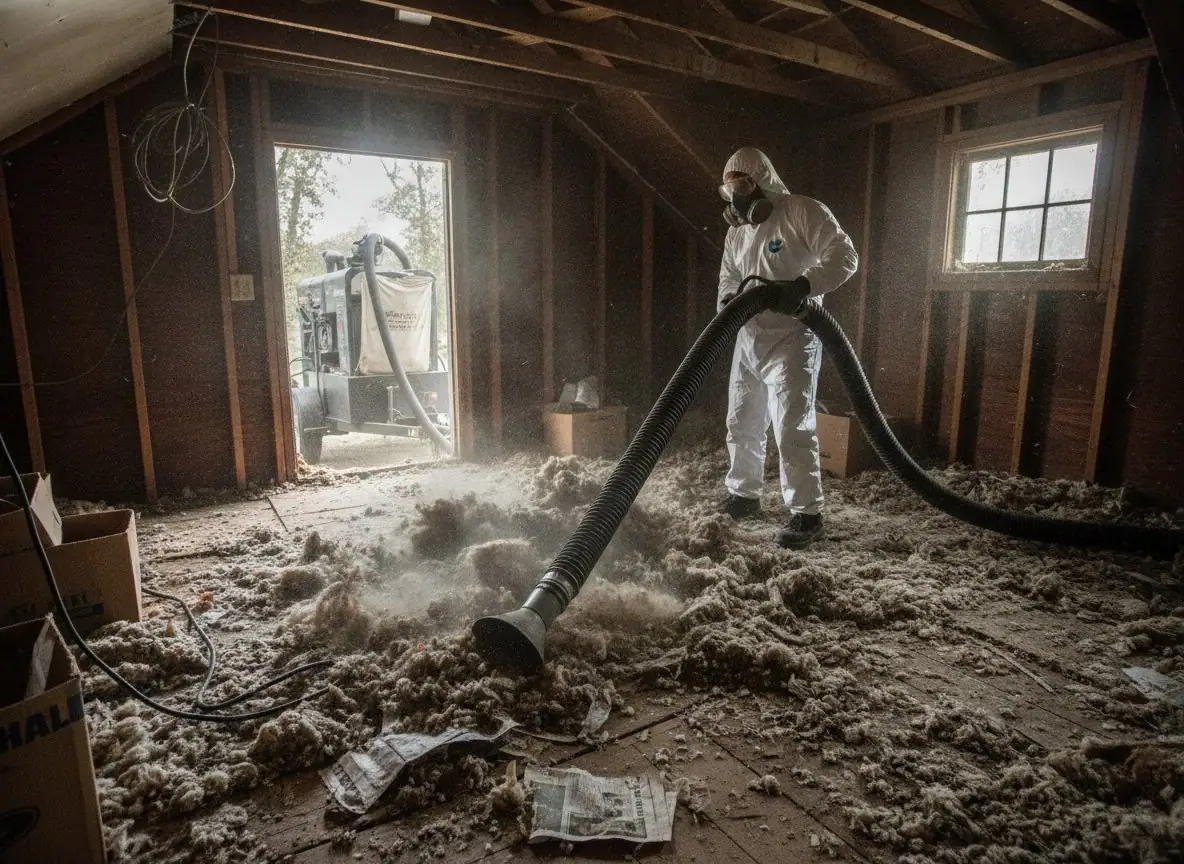
What is spray foam insulation?
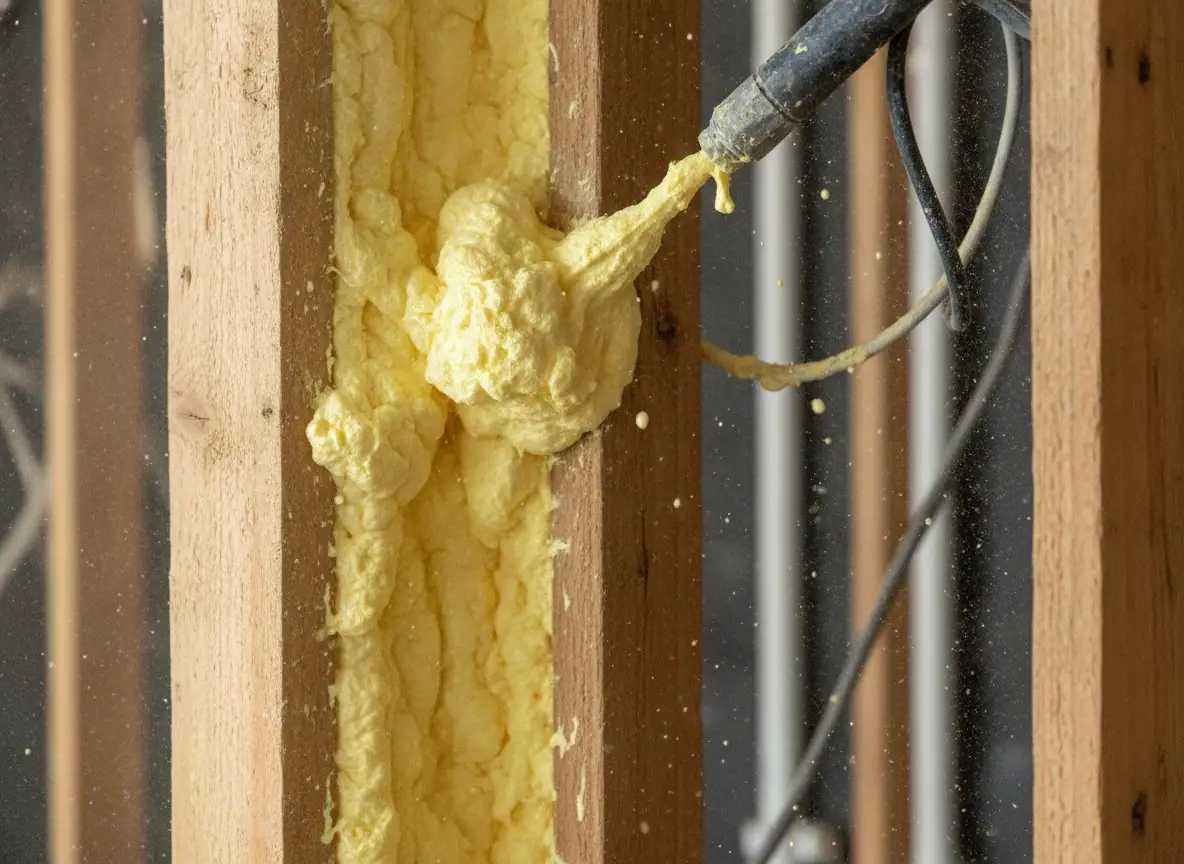
Spray foam insulation is a two-component chemical system — typically polyurethane — that is mixed at the spray gun, applied as a liquid, and expands on contact to fill the target cavity before hardening into a rigid or semi-rigid foam. The expansion is what makes spray foam uniquely effective: it flows into irregular shapes, around wiring and pipes, and into hairline cracks that batts and blown-in products leave open.
Spray foam products come in three formats. Aerosol cans seal small gaps around window frames, electrical penetrations, and pipe entries — these are gap-and-crack sealants, not cavity insulation. DIY two-part kits handle medium-sized jobs such as a single rim joist or a small crawl space section. Professional two-component systems, delivered through heated hoses and proportioning equipment, are what spray insulation contractors use for whole-building work; they achieve consistent mixing ratios and thickness control that aerosol and DIY kits cannot replicate.
Read moreShow less
Vernon's housing stock includes older industrial-adjacent residential buildings, mid-century commercial warehouses, and newer mixed-use structures — many of which have irregular framing, concrete tilt-up walls, or flat roofs that reward spray foam's ability to conform to any surface. Understanding the difference between the two main foam types is the next step before choosing a product.
At a glance
Open cell vs closed cell spray foam: which is right for your building?
Open-cell and closed-cell spray foam are chemically similar at application but structurally very different once cured, and choosing the wrong type for a given application can undermine the entire insulation system.
| Property | Open-Cell Foam | Closed-Cell Foam |
|---|---|---|
| R-value per inch | ~R-3.6 | ~R-5.7 to R-6.6 |
| Density | Light, soft, flexible | Dense, rigid |
| Moisture resistance | Vapor-permeable; not a moisture barrier | Resists moisture and vapor intrusion |
| Sound attenuation | Excellent — absorbs airborne sound | Good — primarily reduces air-transmitted noise |
| Structural contribution | Minimal | Adds racking strength to walls and roofs |
| Cost tier | Lower material cost | Higher material cost |
| Best uses | Interior walls, attic floors, sound-sensitive spaces | Rooflines, crawl spaces, rim joists, exterior walls, below-grade |
A practical decision rule: if the assembly will be exposed to ground moisture, roof leaks, or exterior weather — such as a crawl space, rim joist, or flat-roof deck — choose closed cell spray foam for its moisture resistance and higher R-value per inch. If the goal is interior sound control or filling a deep open cavity on a budget, open-cell foam delivers more volume per dollar. Many projects in Vernon use both: closed-cell on the building envelope and open-cell on interior partitions. Knowing the R-value each type provides per inch helps you calculate the thickness you need to meet California's Title 24 energy code requirements.
Explore your options:
Open-Cell Spray Foam — lighter, vapor-permeable, great for interior cavities and sound control.
Closed-Cell Spray Foam — dense, moisture-resistant, highest R-value per inch for envelope assemblies.
Free, no-obligation estimates
Talk to Clear Path Insulation
Tell us what you need and we’ll take it from there.
What is the R-value per inch of open cell spray foam insulation?
Open-cell spray foam delivers approximately R-3.6 per inch of installed thickness, which is lower than closed-cell foam but still higher than standard fiberglass batts at the same inch-for-inch comparison. Because open cell spray foam is vapor-permeable, it allows moisture to pass through rather than block it — a property that suits vented attic assemblies in drier climates but requires a separate vapor retarder in assemblies where moisture management is critical.
To meet California Title 24 requirements for a climate-zone-specific wall or attic assembly, open-cell foam typically needs to be sprayed to a greater thickness than closed-cell foam would require. For example, reaching R-19 in a wall cavity demands roughly 5.3 inches of open-cell foam versus about 3.0 to 3.3 inches of closed-cell foam. This distinction matters for buildings with shallow framing cavities — a common situation in older Vernon commercial buildings and bungalows where wall depth is limited.
Read moreShow less
Beyond thermal performance, R-value per inch is only part of the energy equation; air leakage accounts for a large share of heating and cooling loss, which is where spray foam's expanding seal distinguishes it from other insulation types regardless of foam category.

Is spray foam more effective than insulation?
Spray foam outperforms most conventional insulation products in air-sealing performance because it expands to fill every gap in the assembly rather than relying on a separate air barrier layer. Fiberglass batts and mineral wool reduce conductive heat transfer effectively, but they do not stop air movement through penetrations, seams, or framing gaps — and uncontrolled air infiltration can account for 25–40% of a building's heating and cooling load.
The practical advantages of spray foam insulation over conventional alternatives include:
- A single-step air seal and thermal barrier — no separate house-wrap or caulking required in many assemblies
- Continuous coverage around wiring, pipes, and irregular framing members
- Reduced HVAC system load, which can extend equipment life
- Meaningful noise reduction, particularly with open-cell foam in interior partitions
- Closed-cell foam adds measurable racking strength to wall and roof assemblies
Read moreShow less
Spray foam does have trade-offs, which any honest comparison must include — and those trade-offs are covered in the downside section below. The right question is not which insulation type is universally best, but which is best for the specific assembly, climate, and budget — and in Vernon's warm, dry climate with periodic Santa Ana wind events that drive air infiltration, the air-sealing advantage of spray foam carries particular value.
Where is spray foam insulation used?
Spray foam insulation is applied across nearly every part of a building envelope, and each application area has specific requirements that determine which foam type and thickness is appropriate.
- Attics: Spray foam is applied either on the attic floor (open-cell, to allow drying) or directly to the underside of the roof deck to create an unvented conditioned attic — a common upgrade in Vernon's flat-roofed commercial buildings.
- Walls: Open-cell foam fills stud cavities from the interior during new construction or gut renovation; closed-cell foam is used on exterior wall sheathing or in thin cavities requiring high R-value.
- Roof decks and flat roofs: Closed-cell foam applied to the underside of a flat or low-slope roof deck seals the deck, insulates, and in some assemblies eliminates the need for a separate vapor retarder.
- Rim joists: The band joist at the perimeter of each floor is one of the highest air-leakage points in wood-framed construction; closed-cell foam seals and insulates it in one step.
- Crawl spaces: Closed-cell foam on crawl space walls and the underside of the floor above controls moisture, blocks pests, and insulates in one application.
- Garages: Spray foam on garage ceilings and walls that adjoin conditioned living space reduces thermal transfer and meets California's requirements for separation between garage and habitable areas.
Knowing where spray foam applies also means knowing its limitations, which leads directly to the question most people ask before committing to the material.
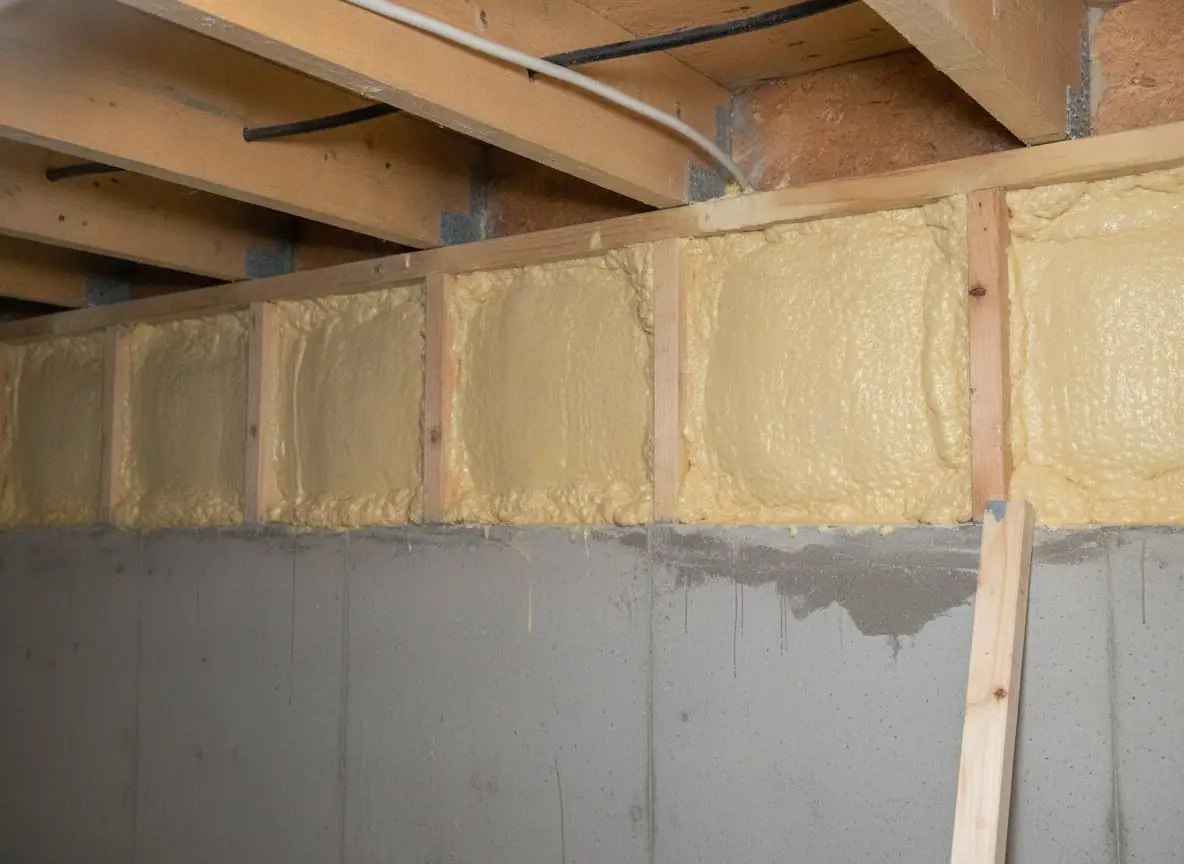
What is the downside of spray foam insulation?
Spray foam insulation has real disadvantages that homeowners and building managers should weigh honestly before choosing it over other insulation options.
Pros:
- Best-in-class air sealing — expands to fill every gap and irregularity
- High R-value per inch, especially closed-cell foam
- Moisture resistance (closed-cell) reduces risk of mold in envelope assemblies
- Durable — does not settle, sag, or absorb pests the way cellulose can
- Reduces HVAC load and noise infiltration
- Adds structural rigidity (closed-cell)
Cons:
- Higher installed cost per square foot than fiberglass or blown-in alternatives
- Requires professional equipment and training for whole-building applications — DIY kits are limited in scope and consistency
- Difficult and costly to remove if future access to wiring or plumbing is needed
- Uncured foam contains isocyanate chemicals that require proper ventilation and re-entry delays
- Open-cell foam requires a vapor retarder in moisture-sensitive assemblies
- Some older closed-cell foam formulations used blowing agents with high global warming potential; newer HFO-blown products address this
- Not appropriate as a sole fire barrier — most codes require a thermal or ignition barrier over exposed foam
Understanding the installation process — including safety requirements and cure time — clarifies how the professional application manages the risks listed above.
How is spray foam installed, and how safe is it?
Professional spray foam installation follows a defined sequence of steps, and each step exists to protect the building, the occupants, and the installation crew.
- Site preparation: Cover or remove items that cannot be masked — spray foam is permanent on contact. Mask windows, floors, electrical boxes, and HVAC equipment in the work zone.
- Substrate inspection: Check for moisture, existing insulation conflicts, and surfaces outside the acceptable temperature range (typically 50–90°F for most products). Spraying over wet substrate traps moisture and compromises adhesion — a step many lower-cost installers skip.
- Equipment setup: Proportioning equipment heats the two chemical components (the "A" side — isocyanate — and the "B" side — polyol blend) and delivers them at precise ratios through heated hoses to the spray gun. Incorrect ratios produce off-ratio foam that is either sticky and under-cured or brittle and weak.
- Application: Trained technicians spray in controlled passes, building thickness in layers. For closed-cell foam, passes are typically limited to 2 inches per lift to manage heat buildup from the exothermic reaction.
- Trimming and inspection: Excess foam is trimmed flush with framing. Thickness is verified with a probe to confirm target R-value is achieved.
- Re-entry and curing: Occupants and unprotected personnel must vacate the sprayed area during application and for a period after — follow manufacturer label instructions, which typically specify a minimum of 24 hours before re-entry without respiratory protection, and confirmation that the foam is fully tacked and no longer off-gassing. Ventilate the space continuously during and after spraying.
- Thermal or ignition barrier: Where foam is left exposed in an occupied space, applicable fire codes require covering it with an approved barrier such as drywall.
Read moreShow less
Installer personal protective equipment — a full-face respirator with appropriate cartridges, chemical splash goggles, gloves, and a Tyvek-style suit — is non-negotiable during spraying. The chemical components are hazardous in uncured form; professional spray foam installers work with this equipment as standard practice, which is why whole-building work is not appropriate as a DIY project. How long this installation lasts once completed is the natural next question.
How long will spray foam last?
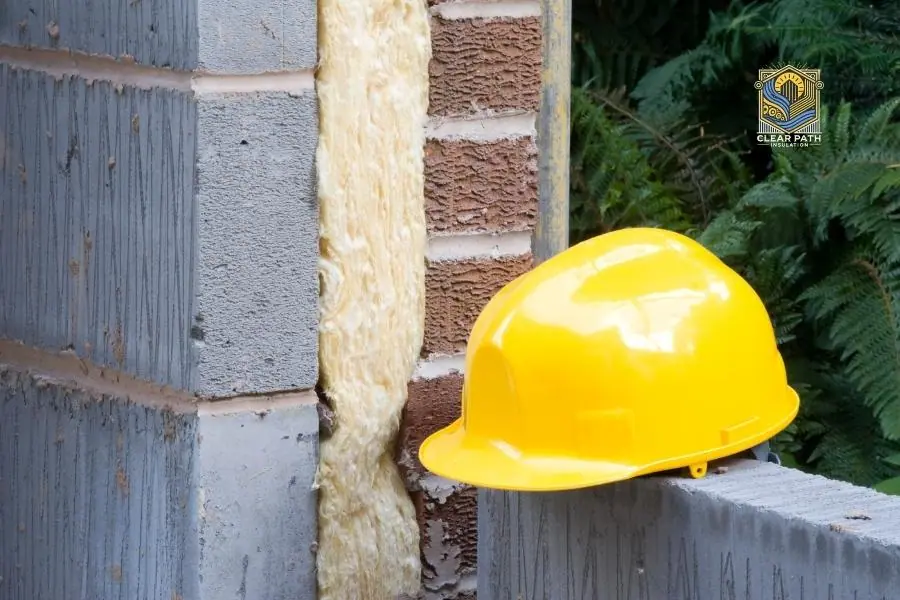
Properly installed spray foam insulation is considered a permanent building material — it does not settle, compress, or degrade the way fiberglass batts and blown-in products can over time. Closed-cell foam, once fully cured and protected from UV exposure, maintains its R-value and air-sealing properties for the life of the building in most interior and semi-exposed applications.
Open-cell foam is similarly durable in protected interior locations but should not be left exposed to UV light, which degrades the polymer over time. Neither foam type absorbs water in normal service (open-cell foam can absorb water if fully submerged — another reason to prefer closed-cell foam in crawl spaces and areas with potential water contact).
Read moreShow less
The practical durability of spray foam means its higher initial cost is spread over a longer service life than products that may need re-application or replacement within 20–30 years. Durability does not eliminate the question of cost — and cost is what most people want to understand before requesting a quote.
At a glance
How much does spray foam insulation cost in Vernon, CA?
We do not publish flat-rate prices for spray foam insulation because the installed cost depends on too many project-specific variables to be useful without a site inspection. The factors that drive spray foam insulation cost in Vernon are consistent across projects, and understanding them helps you evaluate any quote you receive.
| Cost Factor | Why It Affects Price |
|---|---|
| Total area to be insulated (sq ft) | Larger areas require more material and labor time; some overhead costs are fixed regardless of size |
| Foam type (open-cell vs closed-cell) | Closed-cell foam uses more expensive blowing agents and raw materials; it typically costs more per board foot than open-cell |
| Required thickness (inches) | Greater thickness to meet code or target R-value means more material per square foot |
| Access and site conditions | Tight crawl spaces, high ceilings, occupied buildings requiring phased work, or flat roofs requiring equipment staging all add labor time |
| Removal of existing insulation | Old fiberglass batts or damaged insulation must be removed before foam is applied; disposal adds cost |
| Substrate preparation | Moisture remediation, mold treatment, or rodent-proofing required before insulation adds scope and cost |
| Permits | Some California jurisdictions require permits for insulation work, particularly in new conditioned attic conversions or commercial buildings |
Clear Path Insulation provides a written quote after a free on-site inspection — no estimates over the phone without seeing the actual conditions. Financing is available for qualified customers, so upfront cost does not have to be the only factor in your decision. Call (323) 416-2078 to schedule your free inspection.
How do you choose a spray foam insulation contractor?
The right spray foam insulation contractor in Vernon will assess your building before recommending a foam type, explain which assemblies require a thermal barrier over exposed foam under California building code, and provide a written scope of work with itemized materials and thickness targets — not just a price per square foot.
When evaluating spray foam installers, ask:
- Do they inspect the substrate for moisture before spraying? Skipping this step traps moisture and voids the performance of the system.
- Do they use calibrated proportioning equipment with heated hoses, or handheld DIY kits? The equipment determines whether the foam will cure to its rated R-value.
- Can they confirm the foam product's blowing agent and confirm it meets current California requirements?
- Will they install the required thermal or ignition barrier over exposed foam where code requires it?
- Do they handle permits, or is that left to the owner?
- Are they insured, and can they document it?
Read moreShow less
Clear Path Insulation serves Vernon, Cudahy, Boyle Heights, Downtown Los Angeles, Pico-Union, Westlake, Bell, Commerce, East Los Angeles, Florence-Graham, Huntington Park, Lynwood, Maywood, Montebello, and South Gate. We offer 24/7 emergency service, free inspections, and assistance with insurance claims. Financing is available for qualified customers.
Call (323) 416-2078 or request a free spray foam estimate to get a written quote based on your actual building conditions — not a generic price-per-square-foot figure.
FAQ
FAQ
How much does it cost to spray foam a 20x20 garage?
The cost to spray foam a 20x20 garage (400 sq ft of floor area) depends on which surfaces are being insulated — ceiling only, walls only, or both — the foam type selected, the required thickness, and site access conditions. We do not publish flat-rate prices because garage configurations vary significantly. Contact Clear Path Insulation for a free on-site inspection and written quote.
How much does it cost to spray foam a 2,000 sq ft house?
A 2,000 sq ft home involves multiple distinct assemblies — attic, walls, crawl space, rim joists — each with its own foam type, thickness, and access requirements. Total project cost reflects the sum of those individual scopes, not a single per-square-foot rate applied to the floor area. Financing is available. Call (323) 416-2078 to schedule your free inspection.
Can spray foam be used in a Vernon commercial building?
Yes. Clear Path Insulation installs spray foam insulation in commercial buildings throughout Vernon and the surrounding area, including tilt-up concrete warehouses, flat-roof commercial structures, and mixed-use buildings. Commercial projects may require permits and must comply with California Title 24 energy code and applicable fire code requirements for exposed foam assemblies. We handle both residential and commercial insulation work, and our commercial page covers the building types and project requirements in more detail.
Does spray foam block rodents?
Spray foam seals entry gaps that rodents use to enter a building, and closed-cell foam in particular is dense enough to deter casual gnawing through small penetrations. However, spray foam alone is not a rodent-proofing system — determined rodents can chew through foam. For active rodent intrusion, Clear Path Insulation offers Emergency and Rodent-Proofing Services that combine physical exclusion materials with insulation to address the problem more comprehensively. You can see them alongside our other offerings on the services page.
How long before I can re-enter after spraying?
Re-entry timing is governed by the specific product's manufacturer label instructions and must be followed precisely. Most professional two-component spray foam products require the sprayed area to be vacated during application and for a minimum period afterward — typically at least 24 hours — with continuous ventilation, before unprotected re-entry is permitted. Your Clear Path Insulation technician will confirm the specific re-entry requirements for the product used on your project before work begins.
Can spray foam be applied over old insulation?
In some cases, closed-cell spray foam can be applied over existing insulation if the substrate is clean, dry, and structurally sound. In many situations — particularly where existing insulation is damaged, contaminated, or compressed — removal before spraying produces a better result and is required to achieve the target R-value and air seal. We inspect existing conditions during the free on-site assessment and recommend removal only where it is genuinely necessary.
Ready to move forward? Clear Path Insulation in Vernon, CA serves the surrounding communities with professional spray foam insulation services. Call (323) 416-2078 for a free inspection and written estimate — no obligation, no price-per-square-foot guesswork.
Why choose us
Why choose Clear Path Insulation?
Free estimates
Get a clear, no-obligation estimate before any work begins.
Licensed & insured
Your property and our crew are protected on every project.
Residential & commercial
One team for homes, multi-family and commercial properties.
Locally owned & operated
A local team serving your community and the surrounding area.
Get in touch
Find insulation help near you
Request a free estimate online or give us a call — our team will follow up quickly.
- Call us(323) 416-2078
- Visit5333 S Downey Rd, Vernon, CA 90058
- HoursMon-Sun 07:00-19:00